Native Speaker Sentences (from the WAXAL dataset) in Ewe
Play 663 fill-in-the-blank cloze sentences and get fluent faster.
About this Collection
Description
663 sentences read aloud by native Ewe speakers, from WAXAL, a speech dataset by Google Research with University of Ghana (https://huggingface.co/datasets/google/WaxalNLP), licensed CC BY 4.0 (https://creativecommons.org/licenses/by/4.0/). Clozemaster selected the sentences, corrected capitalisation, punctuation and diacritics, chose the missing words, added machine-translated English, which may contain mistakes, and converted the recordings to MP3. Please report any mistakes you find.
All 663 sentences
These sentences come from WAXAL, by Google Research with University of Ghana, licensed CC BY 4.0. Clozemaster selected the sentences, corrected capitalisation, punctuation and diacritics, chose the missing words, added machine-translated English, which may contain mistakes, and converted the recordings to MP3.
-
Xexi la le keke.The umbrella is open.
-
Eƒe leƒe ƒe amadede le yibɔ. Xexi la le yame.Its handle is black in colour. The umbrella is up in the air.
-
Xexi si ŋu amadede ɣi, dzii, kple blɔ le la le tsi me.The umbrella with the colours white, red and blue is in the rain.
-
Ghana dukɔa xɔ ɖokuisi le ƒe akpe ɖeka, alafa asieke blaatɔ vɔ adre me.Ghana gained independence in the year 1957.
-
Tedoxe mee Ghana xɔ ɖokuisi le.It was in March that Ghana gained independence.
-
Aŋuti etɔ̄awo ƒe amadede nye aŋgbaɖiɖi.The three oranges are yellow in colour.
-
Aŋuti si wolā la me nye aŋutiɖiɖi.The inside of the orange that has been cut is orange.
-
Elmina nye du le titina nutome si míate ŋu ado afɔ na amesitsatsa le blema.Elmina is a town in the Central Region that we can trace back to the slave trade of the past.
-
Tɔkɔ Atɔlia nye teƒe si Eʋeawo hea to na nu gbegblē wɔlawo le le blema.Tɔkɔ Atɔlia is the place where the Ewe punished wrongdoers in olden times.
-
Togo dukɔa medidi tso Ghana gbɔ o.The country of Togo is not far from Ghana.
-
Nyɔnuvi la ƒle aŋuti ɖiɖi et̃ɔ eye wòma ɖeka me.The girl bought three ripe oranges and cut one in half.
-
Wole wo nɔewo yome.They are one behind the other.
-
Enɔ anyi ɖe zikpui dzi hele agbalē me tom.He is sitting on a chair, looking through a book.
-
Tata sia ɖe tugbedze aɖe si do atalegbe aŋutiɖiɖi la nɔ anyi ɖe zikpui bɔbɔe me da afɔ ɖe afɔ dzi hele nyadzɔdzɔgbalẽ xlẽm.This drawing shows a young woman in long orange trousers sitting in a soft chair with her legs crossed, reading a newspaper.
-
Yame afa tso fiē ga atɔ̄ va se ɖe zā blibo la katā eye gbafi vi aɖe awɔ tso ga wuiɖeke.The weather will be cool from five o'clock in the evening through the whole night, and there will be a little drizzle from eleven o'clock.
-
Zā do le tsia dzi.Night has fallen over the water.
-
Nyinɔ la le zɔzɔm ɖekaɖeka yina ɖe kpo me.The cow is walking slowly on its way into the pen.
-
Nyɔnu kple ŋutsu aɖe lé alɔ na ɖevi si le titina na wo hele zɔzɔm.A woman and a man are holding the arms of the child who is between them and are walking along.
-
Ame etɔ le zɔzɔm helé alɔ na wo nɔewo.Three people are walking, holding one another by the arm.
-
Woɖo agbalē la ɖe woƒe kpekpeme nu.The books have been arranged according to their weight.
-
Kokonte nye nuɖuɖu si wotsɔ agbeli wɔ.Kokonte is a food made from cassava.
-
Kakum Paak ƒe didime tso Cape Coast dziehe la, le agbadroƒe blaeve ene me.Kakum Park lies about twenty miles north of Cape Coast.
-
Tomato la ƒe amadede le dzii eye eƒe gbo la le gbemumu ƒe amadede me.The tomato's colour is red and its stalk is green in colour.
-
Edo asi eveawo ɖa eye wolé dzilawo ƒe asi, siwɔe be eƒe asi eveawo le yame.He stretched out both hands and held his parents' hands, which is why both his hands are in the air.
-
Sekina ʋu eƒe nu vɔ me na fofoa.Sekina confessed her wrongdoing to her father.
-
Xɔese do agɛ gbogbo le abo hoʋiʋli si yi edzi le eƒe sukua kple Ama ƒe suku la dome.Xɔese scored a lot of goals in the football match that took place between his school and Ama's school.
-
Atsiaƒu le ɣea te eye sika ƒe amadede le ɣea tame, eƒe keklẽ le dzodam ale gbegbe.The sea is beneath the sun and there is a golden colour above the sun; its brightness is blazing so much.
-
Nyi la tsi tsitre ɖe kpo me.The cow is standing in the pen.
-
Nyi aɖe le tsitre ɖe afi sia.A cow is standing here.
-
Le ƒe sia ƒe Ɖokuisixɔ ŋkeke ƒe azɔlizɔƒe la, dukplɔla do ŋugbe na dukɔmeviwo be ƒe si gbɔna la ƒe wɔnawo anɔ tɔxɛ.At this year's Independence Day parade, the president promised the citizens that next year's events will be special.
-
Ame kae kplɔ Ghana dukɔa le ɖokuisixɔxɔ vɔ megbe? Kwame Nkrumah nye dudɔwɔla kple dukplɔla na Ghana dukɔ.Who led the country of Ghana after independence? Kwame Nkrumah was prime minister and president of Ghana.
-
Woƒe amadedewo nye aŋgbaɖiɖi.Their colours are yellow.
-
Ŋɔ gã aɖe le dodom le atadiɖiɖi me. Eƒe asikɛ le gota. Atadi la lolo hebiã helihelĩ.A big worm is coming out of a ripe pepper. Its tail is outside. The pepper is big and bright red.
-
Gɔmesese kae le amadede dzii si le Ghanaflaga la me?What is the meaning of the red colour in the Ghana flag?
-
Nufiala de dɔ asi na Sika le suku.The teacher gave Sika an assignment at school.
-
Nufiala etɔawo va le dzinu etɔlia me.The three teachers came in the third month.
-
Alban Bagbin nye sewɔtakpeƒemenɔlawo katā ƒe nunɔla.Alban Bagbin is the leader of all the members of parliament.
-
Kofi ƒle kplu ene siwo ƒe amadede nye dzĩ, aŋutiɖiɖi, bl̃ɔ kple yibɔ na nɔvia.Kofi bought four cups whose colours are red, orange, blue and black for his sibling.
-
Alilikpowo le yame eye towo hã ƒe amadede nye gbemumu.Clouds are in the sky and the mountains too are green in colour.
-
Towo ƒo xlā atsiaƒua.Mountains surround the sea.
-
Le tá aɖe to, towo le teƒea.Beside a lake, there are mountains at the place.
-
Eƒe towo dzɔ tiŋtiŋtiŋ eye edzi hā zrɔ̄ lālālā.Its edges are perfectly straight and its top is very smooth too.
-
Ʋu yeyewo le DVLA dɔwɔƒea si womekpɔ wɔ agbalẽ na o.There are new vehicles at the DVLA office whose papers have not yet been done.
-
Abidzani nye Fraŋsɛduwo dometɔ ɖeka eye ameha siwo le wo me la ƒe ɖee nye Julatɔwo.Abidjan is one of the French-speaking cities, and one of the groups of people in it is the Dioula.
-
Seƒoƒo si nye gbemumu la le seƒoƒoze me le fesre la to le xɔa godo.The green plant is in a flower pot at the window on the outside of the building.
-
Nufiala vovovowo le Mawu ƒe sewo fiam le sɔlime.Various teachers are teaching God's laws in church.
-
Le takpekpe la vɔ megbe la, woma atsiƒuƒui na ame sia ame be woatsɔ aɖe nume.After the meeting ended, atsiƒuƒui was shared out to everyone to snack on.
-
Xexeame godoo lāmesēdɔdzikpɔlawo ƒe habɔbɔ (WHO) wɔ takpekpe heda asi ɖe ɖevi siwo mexɔ ƒe eve haɖe o la, ƒe abɔtabui dodo la dzi.The World Health Organization (WHO) held a meeting and approved the vaccination of children who are not yet two years old.
-
Xeviwo le dzodzom le seƒoƒo la dzi.Birds are flying over the flower.
-
Anyiwo le dzodzom le tame nɛ.Bees are flying above it.
-
Anyi etɔ le dzodzom ɖe seƒoƒoawo dzi.Three bees are flying onto the flowers.
-
Mese veve be nyemeyi Sɔleme le Kɔsiɖagbe o.I felt bad that I did not go to church on Sunday.
-
Wɔdeme kple detsiƒuƒuie zɔna.Wɔdeme goes with detsiƒuƒui.
-
Ɖevi la ƒle yevukutsetse eve tso Gɛ.The child bought two apples from Accra.
-
Nyɔnu la ƒle agbalẽ yeyewo na ɖevi la.The woman bought new books for the child.
-
Tsi ɖo be yeadza eya ta alilikpowo ɖo ɖe yame.It is about to rain, so clouds have gathered in the sky.
-
Alilikpowo bu le yame si aɖe mɔ na ŋdɔ ƒe ʋuʋu sesiẽ le tso ŋdɔ ga ɖeka va se ɖe fiẽ ga ene.The clouds have disappeared from the sky, which will allow strong sunshine from one o'clock in the afternoon until four o'clock in the evening.
-
Ɖevia ƒo abo si nye ɣi kple yibɔ la sesiẽ wòge ɖe ɖɔ ɣi la me.The child kicked the white and black ball hard and it went into the white net.
-
Ŋdɔ aʋu sesiẽ le egba ƒe ŋkeke la me eye mɔkpɔkpɔ aɖeke meli na tsi ƒe dzadza o.The sun will shine strongly during the day today and there is no expectation of rain.
-
Seɖinam yi asime.Seɖinam went to the market.
-
Ɖelalɔm ƒle awu yeye le asime nyitsɔ Kuɖa si va yi.Ɖelalɔm bought a new dress at the market last Wednesday.
-
Le nɔnɔmetata me la, aŋutiɖiɖi ƒe atikutsetse le dome na seƒoƒo la eye ete nye gbemumu.In the picture, an orange fruit is in the middle of the flower and its base is green.
-
Agbenyo fe atikutsetse eve la dometɔ ɖeka me.Agbenyo split one of the two fruits.
-
Da la bla ɖe ati dze eve ŋuti.The snake is wrapped around a tree with two forks.
-
Ɖevia do gasɔ yibɔ la yi suku eye wòdae ɖe ati te.The child rode the black bicycle to school and parked it under a tree.
-
Gasɔ kɔkɔ yibɔ nya kpɔ.The tall black bicycle is beautiful.
-
Gasɔ le amadede yibɔ me.The bicycle is black in colour.
-
Amewo le gasɔ la dom.People are riding the bicycle.
-
Afɔɖoƒe mele gasɔ la ŋuti o.The bicycle has no pedals.
-
Ɖɔɖɔɖɔe Pokua zɔ hafi ge ɖe xɔme.Pokua walked slowly before entering the room.
-
Evo le eme, eye wòdze ŋɔ.It is rotten inside and it has got worms.
-
Asomoah Gyan nye aboƒola xɔ ŋkɔwo dometɔ ɖeka le Ghana dukɔme kple gbeta dukɔwo siaa me.Asamoah Gyan is one of the famous footballers both in Ghana and in foreign countries.
-
Aboƒola la le atsyiā ɖem kple abo la.The footballer is showing off his skills with the ball.
-
Ame kae nye Abedi Pele? Enye Ghana aboƒola xɔŋkɔ dometɔwo ɖeka.Who is Abedi Pele? He is one of Ghana's famous footballers.
-
Aboƒoƒo nye lāmesēfefewo dometɔ ɖeka.Football is one of the sports.
-
Yame ƒe tɔtrɔ nyawo ɖe fia be tsi adza le egbe ŋkekea me. Ehiā vevie be míanɔ mɔkpɔkpɔ me na tsi sia ƒe dzadza.The weather report shows that it will rain during the day today. It is very important that we stay prepared for this rain.
-
Seƒoƒo blɔ si ƒe atikutsetse nye aŋuti ɖiɖi la ƒe aŋgba nye gbemumu.The blue flower whose fruit is orange has leaves that are green.
-
Aŋgba gbemu le ete eye eƒe ati si le titina nɛ la hã nye blɔ.There is a green leaf at its base, and the stalk in the middle of it is blue too.
-
Ʋɔtru si wodo ɖe Ghana bɔluƒoƒea ƒe agbonu la ɖoa ŋku ɖokuisi me nɔnɔ dzi na Ghana dukɔmeviwo.The gate erected at the entrance to Ghana's football ground reminds Ghanaians of independence.
-
Le ŋkuɖoɖo Kwame Nkrumah ƒe ŋkeke dzi la, dukplɔwo dea dzi ƒo na dukɔmeviwo be woanɔ agbe abe Nkrumah ene.On Kwame Nkrumah Memorial Day, leaders encourage citizens to live as Nkrumah did.
-
Nɔnɔmetata aɖe le gli ŋu eye le nɔnɔmetata me la, ŋdɔ le ʋuʋum.There is a picture on the wall, and in the picture the sun is shining.
-
Foto le gli ŋu eye nɔnɔmetata siwo nye tɔsisi kple ŋdɔ le edzi.There is a photo on the wall with pictures of a river and the sun on it.
-
Ŋutsu la ziɔ gasɔ la ɖe gli ŋu.The man leaned the bicycle against the wall.
-
Ʋli Tsitsatsa si wogayɔna na be Agumatsa la, nye tsitsatsa kɔkɔtɔ kekeake le Ghana dukɔme.Wli Falls, which is also called Agumatsa, is the highest waterfall of all in Ghana.
-
Afadzato nye to kɔkɔtɔ kekeake le Amugā nutoa me.Afadzato is the highest mountain of all in the Volta Region.
-
To kae nye to kɔkɔtɔ kekeake le Amugā nutoa me? Afadzato.Which mountain is the highest of all in the Volta Region? Afadzato.
-
Benin kple Ghana dukɔ la gale tsitsim ɖe edzi.Benin and Ghana are still growing.
-
Gbemumuwo hā to ɖe atsiaƒua to.Greenery also lines the edge of the sea.
-
Fetridetsi kple amɔkukplē dzɔa dzi na Eʋeawo.Okra soup and amɔkukplē make the Ewes happy.
-
Kpekpeɖeŋu kple nunana si dumeviwo na lae wotsɔ tu gbedoxɔ lae.It was with the help and donations given by the townspeople that the chapel was built.
-
Kwame Nkrumah ƒe kutrikuku kple dɔwɔwɔwoe na Ghana xɔ ɖokuisi.It was Kwame Nkrumah's perseverance and hard work that won Ghana its independence.
-
Dɔwɔlawo ƒe ŋkeke nye ŋkeke si wodea dzesi ɖokuisi kple yevudɔwɔla ƒe kutrikuku kple adodohehe le dukɔa ƒe ŋgɔyinyawo me.Workers' Day is a day on which the hard work and struggle of self-employed and salaried workers in the country's development are recognised.
-
Woɖo tsinokpluawo ɖe ɖoɖonu tso suetɔ yi gātɔ dzi.The drinking cups have been arranged in order from the smallest to the biggest.
-
Kɔku de sukukɔkɔ le amegã nuto me le ƒe 2004 me.Kɔku attended university in the Volta Region in the year 2004.
-
Ŋutsuvi kɔkɔ si do le sukukɔkɔ me la le dɔ wɔm le ECOBANK.The tall young man who graduated from university is working at ECOBANK.
-
Nɔnɔmetata meɖe ame aɖeke ƒe ŋkume fia o.The picture does not show anyone's face.
-
Lilikpoa xe ɣe la ŋkume.The cloud has covered the face of the sun.
-
Afiwa ɖo tsinokplu ene ɖe nuɖukpl̃ɔ la dzi ɖekaɖeka.Afiwa set four drinking cups on the dining table one by one.
-
Tɔsisi le towo dome eye alilikpowo le dziƒo.A river is between the mountains and clouds are in the sky.
-
Burkina Faso nye Francais dukɔ si ma liƒo kple Ghana le dziehe.Burkina Faso is a French-speaking country that shares a border with Ghana to the north.
-
Tomatosi la le anyigba eye karɔti la mlɔ anyi ɖe eƒe axadzi.The tomato is on the ground and the carrot is lying beside it.
-
Agbezuge ƒe nu wɔ nublanui le agbalẽ la me.Agbezuge's plight in the book was pitiful.
-
Ŋkuɖovɔsa ŋkeke nye Moslemiwo ƒe azā tɔxɛwo dometɔ ɖeka.The day of the sacrifice of remembrance is one of the Muslims' special festivals.
-
Ne ame aɖeke meyi o la ekema madɔ Aɖugba ɖa Blaɖa ɣetrɔ.If nobody goes, then I will send Aɖugba on Tuesday afternoon.
-
Agbledela ɖe wòƒle afɔkpa ɣi la?Did the farmer buy the white shoes?
-
Edo afɔkpa yibɔ.He is wearing black shoes.
-
Afɔkpa asiekɛ le xɔ asiekɛlia me.Nine shoes are in the ninth room.
-
Meƒle afɔkpa la le Cameroon.I bought the shoes in Cameroon.
-
Tomato kple karɔti nye agblemenukuwo dometɔ ɖeka.Tomatoes and carrots are among the farm crops.
-
Eƒe leƒe ƒe amadede nye avumi.Its handle's colour is brown.
-
Seɖinam dadaa ƒle kpetike eve kple akpɔnɔvivi etɔ̄ na Selikem kple Enyo.Seɖinam's mother bought two toffees and three biscuits for Selikem and Enyo.
-
Ati dama aɖe le sɔgbe aɖe dzi.There is a green tree on a plain.
-
Tsi dzana le Afɔfie me.It rains in April.
-
Tafi Atome, le Amugā nutome nye du si me kesewo ƒe modzakatsaɖiƒe le.Tafi Atome, in the Volta Region, is the town where the monkey sanctuary is.
-
Tafi Atome nye teƒe nyakpɔ aɖe si kesewo le le Ho nutoa me.Tafi Atome is a beautiful place where there are monkeys, in the Ho area.
-
Dɔdzikpɔla ƒe nuɖuɖu vevie nye akplẽ kple agbametadi si wotɔ koklozi kple abɔbi tsɔ kɔ ɖe eme.The supervisor's favourite food is akplẽ with ground pepper sauce topped with fried egg and anchovies.
-
Gbè kɔkɔwo to ɖe sɔgbea dzi.Tall grasses have grown on the grassland.
-
Enye modzakatsaɖiƒe xɔ ŋkɔwo dometɔ ɖeka le Ghana kple eƒe duwo me.It is one of the famous tourist sites in Ghana and its towns.
-
Wli tsitsetse nye tsitsetse si le Hohoe nutoa me eye wònye teƒe si amewo ɖina tsa yina hena modzakaɖeɖe.Wli Falls is a waterfall in the Hohoe area, and it is a place that people visit for recreation.
-
Le Blaɖagbe la, nye kple Foli míayi Keta.On Tuesday, Foli and I will go to Keta.
-
UEW nye sukukɔkɔ si hea nufialawo le Ghana dukɔa me.UEW is a university that trains teachers in Ghana.
-
Dzisasā la te do viviti.It is dark under the bridge.
-
Agblemenuku aɖewoe nye esi.These are some farm crops.
-
Enye modzakatsaɖiƒe si amedzrowo te ŋu dena wu.It is the tourist site that visitors go to the most.
-
Esi aŋɔ yibɔ na wo.He painted them black.
-
Yevu ƒe avutsu yibɔ aɖe enye esia le fefem.This is a black foreign-breed male dog, playing.
-
Adzo kple Kofi le fefem.Adzo and Kofi are playing.
-
Fofonye le Nigeria.My father is in Nigeria.
-
Logosu de ta agu na Fia Adoblanui le Tsiamigã Aɖukpo ƒe gbeɖeɖe nu.Logosu bowed down to Chief Adoblanui at the command of the chief linguist Aɖukpo.
-
Lo si tsi wu le Paga lotame la, xɔ ƒe blaenyi.The oldest crocodile in the Paga crocodile pond is eighty years old.
-
Blikaklo kple dzogbɔe dzɔa dzi na ɖeviwo le vuvɔ ŋɔli.Blikaklo with porridge makes children happy in the cold season.
-
Aŋuti ɖeka ƒe afā le ŋgɔ na eve susɔewo.Half of one orange is in front of the remaining two.
-
Wolí agbadɔ sia ɖe sɔgbe si ƒe amadede nye gbemu la dzi.This tent has been pitched on the green field.
-
Kotoka yameʋudzeƒe nye agbo na Ghana dukɔ na ame siwo zɔa mɔ to yame.Kotoka Airport is the gateway to Ghana for people who travel by air.
-
Keta amutɔsisi la de nu Savietulatɔ me heyi Anyaŋui.The Keta Lagoon runs into the Savietula waters and goes on to Anyanui.
-
Wowɔ Kwame Nkrumah ƒe sɔgbe be wòanye bubudede dukɔa ƒe ŋusētɔ la ŋu.The Kwame Nkrumah park was built to honour the nation's great leader.
-
Awu yibɔa kpovitɔ la doa?Is it the black uniform that the police officer wears?
-
Bosumtwi nye dzɔdzɔme tɔsisi gã si le Ghana dukɔa me le Ashanti nutome eye wònye teƒe kɔkɔe kple ɣaɣlaƒe na wo.Bosumtwi is a large natural lake in Ghana, in the Ashanti Region, and it is a sacred place and a refuge for them.
-
Eda ɖeka ɖe miame eye evelia le ɖusime.One has been placed on the left and the second is on the right.
-
Tugbedze aɖe nɔ anyi ɖe zikpui bɔbɔe me hele nyadzɔdzɔgbalẽ xlẽm.A young woman is sitting in a soft chair reading a newspaper.
-
Wozaa xexi sia le dzodzome kple tsidzaɣi sia. Gakpo si nye alɔ na xexi la le yibɔ eye ete le gɔdɔ.This umbrella is used in the hot season and in the rainy season. The metal rod that serves as the umbrella's handle is black and its end is curved.
-
Gbedamawo ƒo xlā to kɔkɔ la.Green vegetation surrounds the high mountain.
-
Aku kple Esenam nye xɔlɔ veviwo.Aku and Esenam are close friends.
-
GCB nye Ghana ƒe gadzraɖoƒe gã le dukɔ me.GCB is Ghana's big bank in the country.
-
Kwami ƒle kɔɖu na kese.Kwami bought a banana for the monkey.
-
Dzigbɔɖi ƒo detsi vivi na amedzro eve siwo va wo gbɔ la eye woɖu.Dzigbɔɖi made a tasty soup for the two visitors who came to their home, and they ate it.
-
Eƒe asike le yame esime wòle dua ƒum.Its tail is up in the air as it runs.
-
Amadede ɣi kple yibɔtɔ le nyi la ŋuti eye amadede yibɔ la sɔgbɔ wu ɣitɔ eye eƒe asike hã didi.The cow has white and black colours on it, and the black is more than the white, and its tail is also long.
-
Alia to adeli le Afadza hafi aɖiɖi.He will climb the sixth mountain at Afadza before coming down.
-
Eƒe ble la mete ŋu ka ati la ŋu o.Its tail could not reach the tree.
-
Woƒe ble le yibɔ.Their tails are black.
-
Nu vevi kawoe wotsɔ ɖaa akplẽ? Zi geɖe la, Eʋeawo zãna bliwɔ tsɔ ɖaa wɔkplẽ.What main ingredients are used to cook akplẽ? Most of the time, the Ewes use corn flour to cook wɔkplẽ.
-
Dɔwɔna kae Jerry John Rawlings wɔ hafi zu dunyahela? Jerry John Rawlings nye Gbadagba hafi va ge ɖe dunyahenyawo me.What work did Jerry John Rawlings do before he became a politician? Jerry John Rawlings was a soldier before he went into politics.
-
Leƒe le esi.It has a handle.
-
Amadede piŋki le teƒe si wòle be ʋuwo nato la dzi tututu.There is a pink colour right on the place where vehicles are supposed to pass.
-
Ahũhɔe la le nogo.The mirror is round.
-
Meƒle atɔtɔ atɔ̄ le kɔƒe atɔ̄lia me na vinye atɔ̄awo.I bought five pineapples in the fifth village for my five children.
-
Iŋdipɛndeŋs Skɔɛ nye teƒe si wotu hena azāɖuɖu na Ghana dukɔa ƒe ɖokuisixɔxɔ.Independence Square is a place that was built for celebrating Ghana's independence.
-
Xexeame fana le Adeamekpɔxe me le Ghana dukɔa ƒe dziehe lɔƒo.The weather is cool in November in the northern part of Ghana.
-
Wole flime le wo nɔewo yome.They are in a row, one behind the other.
-
Ƒome sue le tsitre ɖe mɔto.A small family is standing by the roadside.
-
Nusrɔlawo meyia suku le Memliɖagbe o.Students do not go to school on Saturday.
-
Nutunu le nu nɛ.It has a lid on it.
-
Nyinɔ la le amadede yibɔ kple ɣi me.The cow is black and white in colour.
-
Esiae nye nyinɔ aɖe si le gbe dzi hele ekplɔla dzɔm elabe gbe aɖeke hã mele egbɔ ne woaɖu o.This is a cow that is on the grass waiting for its herder, because there is no grass at all near it for it to eat.
-
Eƒe seƒoƒowo le dzii.Its flowers are red.
-
Selikem ɖa wɔkplē kple agbametadi na srɔa le Kuɖagbe ŋdɔme.Selikem cooked wɔkplē and agbametadi for her husband on Wednesday afternoon.
-
Kristotɔwo yia sɔleme le Kɔsiɖagbe.Christians go to church on Sunday.
-
Eʋe nusrɔƒea ƒe CEANA ƒe Eʋegbe sɔsrɔ wɔna la le kpekpem ɖe míaŋu ŋutɔ.The Ewe department's CEANA Ewe-learning programme is helping us a great deal.
-
Jamestown kaɖiti nye kaɖiti xoxowo dometɔ ɖeka si le Gɛ.The Jamestown lighthouse is one of the old lighthouses in Accra.
-
Abo la ge ɖe ɖɔka la me hewɔe wòhe tintintin.The ball went into the net and pulled it tight.
-
Ŋutsu tso bladzo ɖiɖi et̃ɔ le agblea me.A man cut three ripe plantains on the farm.
-
South Africa dukɔa ƒe aboƒoha la ɖu dzi hexɔ dziɖuɖukplu si dze na akpedada ɣe sia ɣi.South Africa's football team won and received the winners' trophy, which always deserves applause.
-
Kafukafu kple akpedada sɔŋ yɔ subɔlawo ƒe dzime.Nothing but praise and thanksgiving filled the worshippers' hearts.
-
Akɔɖu ɖiɖi le akɔɖuti te.Ripe bananas are under the banana plant.
-
Amakpa gbemu eve le nugbɔ nɛ.It has two green leaves at its tip.
-
Ista alo Yesu ƒe fukpekpe, ku kple dziƒoyiyi ƒe azā la nye vevitɔ kekeake na Kristotɔ siwo nye ametsitsiwo.Easter, the festival of Jesus's suffering, death and ascension, is the most important of all for Christians who are adults.
-
Ami ɖu eƒe dzigbezã wuievelia le dzinu wuieve ƒe ŋkeke wuieve.Ami celebrated her twelfth birthday on the twelfth day of the twelfth month.
-
Dzodze ƒe ŋkeke et̃ɔagbee nye Ama ƒe dzigbezã.The third day of February is Ama's birthday.
-
Ɖevi la kple edzilawo le mɔ me tsom eye wolé eƒe asiwo.The child and his parents are crossing the road and they are holding his hands.
-
Moslemiwo ƒoa ƒu ɖe woƒe gbedoxɔme le Fiɖagbe.Muslims gather in their mosque on Fridays.
-
Le Gɛ sime la, meƒle atsiƒuƒui de agba me na ɖevi siwo le aƒea me nam.At the market in Accra, I bought atsiƒuƒui and put it in my load for the children at home.
-
Ŋutsu la le abo ƒom kple eƒe miafɔ.The man is kicking the ball with his left foot.
-
Wona ŋkeke ɖeka ƒe mɔkeke sukuviwo be woaɖi ɖe eme le Hogbetsotso zã la ɖuɖu vɔ megbe.The schoolchildren were given a one-day holiday to rest after the Hogbetsotso festival had been celebrated.
-
Amadede blɔ, gbemumu, kple aŋugbaɖiɖiwo le seƒoƒoa ŋu.There are blue, green and yellow colours on the flower.
-
Sukuvi ɖevi aɖe kpa dzogoe etɔ̄ tikpakpɛ.A young pupil carved triangles out of wood.
-
Ŋutsu la ƒe taɖa le yibɔ.The man's hair is black.
-
Kpomebolo megabɔ le Aŋlɔawo dome abe ale si wònɔ tsā ene o.Kpomebolo is no longer as common among the Anlo as it used to be.
-
Da xatsa ɖe ati aɖe ŋuti eye da la fɔ ta dzi hedo eƒe aɖe ɖe ŋgɔ.A snake is coiled around a tree, and the snake has raised its head and stuck its tongue out.
-
Eda afɔ ɖe afɔdzi hele nyadzɔdzɔgbalē xlēm.He has crossed his legs and is reading a newspaper.
-
Ŋutsu la le nyadzɔdzɔgbalē xlēm.The man is reading a newspaper.
-
Xɔmetsovɔ ɣi si wotsɔ xe fesrea nu la hā le dzedzem.The white curtain that was used to cover the window is also showing.
-
Fufu kple azidetsie ame geɖewo ɖana le azāɖuɣiwo.It is fufu with groundnut soup that many people cook at festival time.
-
Ayikplẽ la ƒe ʋeʋe lili la xɔ aƒea katã me kple egodo.The pleasant aroma of the ayikplẽ filled the whole house and the yard outside.
-
Tsidzadza sesē aɖe kple ahomya aƒo tso ŋdɔ ga wuieve me si aɖefu na dɔwɔwɔ. Dzilawo kple sukuviwo miɖɔ ŋu ɖo.Heavy rain and a storm will strike from twelve noon, which will disrupt work. Parents and schoolchildren, be prepared.
-
Ŋutsu la nɔ anyi ɖe akpasa me heda afɔ ɖe afɔ dzi hele nyadzɔdzɔgbalẽ xlem.The man sat down in an armchair, crossed his legs and is reading a newspaper.
-
Ebɔbɔnɔ anyi ɖe akpasa dzi.He is sitting down on an armchair.
-
Akpasa la ƒe amadede nye avumi, ke eƒe afɔtiwo nye ŋgbaƒuƒu ƒe amadede.The armchair's colour is brown, but its legs are the colour of dry leaves.
-
Akpɔnɔvivi etɔ̄ la le avumi ƒe amadede me eye kpetike eve la le blɔ.The three biscuits are brown in colour and the two tablets are blue.
-
Woɖo akpɔnɔvivi la ɖe flime.The biscuits have been arranged in a row.
Why learn with Clozemaster?
The fastest way to get fluent for advanced beginners and intermediate learners.
Play through thousands of “clozes”, fill-in-the-blank sentences. Learn in context, score points, and track your progress.
Always in context
50+ languages
Varying difficulty levels
Fun ways to play
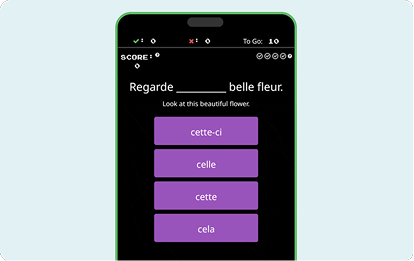
Multiple choice
Play through thousands of sentences to practice your reading skills, expand your vocab, and level up your grammar skills.
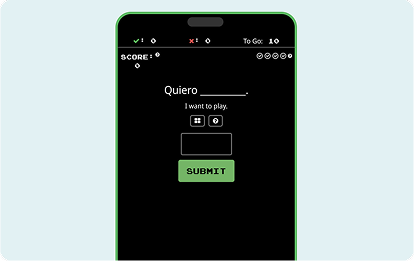
Text input
Put your memory to the test while improving your writing skills. Find out whether you really remember that conjugation or spelling.
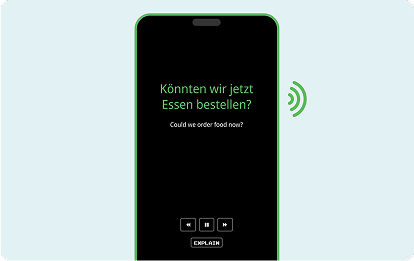
Practice listening
Fill in the missing word or sentence based on what you hear, or try the hands-free radio mode, currently in beta on the mobile app.

Best of all language learning apps I’ve tried, and I’ve tried a plenty. With this app, I actually retain the vocabulary and sentence structures I learn, while most other apps that provide a more fun game-like experience end up almost useless for actual learning.
—Pentti S., Google Play
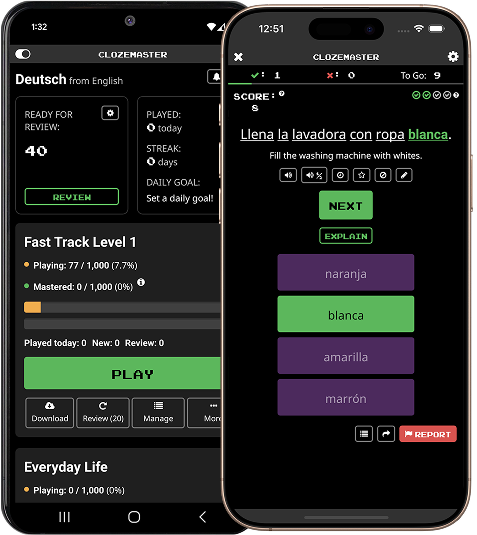
Learn on the go.
Use your downtime to level up.


Get fluent even faster with
Clozemaster Pro

Unlimited play
While a free account lets you play up to 30 sentences each day, a Pro account lets you practice as much as you want.

Unlimited listening
Understand your target language faster with unlimited listening practice in multiple modes for over 30 languages.

Unlimited languages
Maximize your learning potential with access to every language available on Clozemaster, at no extra cost.

Offline mode
Keep learning anytime, anyplace by downloading all of your collections to play offline in the mobile app.
 1-c1c9ae743b32e19cc016d0a8c84189e0070087d17233c96358e58432950e5cc8.svg)
Cloze-Reading
Improve your reading skills by filling in missing words for longer texts. Play Wikipedia articles, or import your own.

Customize to you
Adjust play options for how you learn best, including review intervals and number of sentences per round.